Information Architecture
Information Architecture
Designing language and structure for The Intercept's growth
Designing language and structure for The Intercept's growth
Scaling content discovery by transforming a decade of legacy editorial debt into a structured, relational taxonomy.
Role: Lead Product Designer & IA
The Team: Chief of Product
Scope: Systemic content standardization
Scaling content discovery by transforming a decade of legacy editorial debt into a structured, relational taxonomy.
Role: Lead Product Designer & IA
The Team: Chief of Product
Scope: Systemic content standardization
Problem
Years of "editorial debt" with jargon-heavy, inconsistent labels that made discovery impossible for new readers.
Problem
Years of "editorial debt" with jargon-heavy, inconsistent labels that made discovery impossible for new readers.
Solution
A cross-functional taxonomy overhaul. I mapped internal "beats" to user search intent and built a scalable system for the CMS.
Solution
A cross-functional taxonomy overhaul. I mapped internal "beats" to user search intent and built a scalable system for the CMS.
Result
Developed the organization's guidelines for content tagging and standardized workflow between Editorial, Product, and Development teams.
Result
Developed the organization's guidelines for content tagging and standardized workflow between Editorial, Product, and Development teams.
Our brand evolved. Our categories didn't. New readers needed a new introduction.
With declining search and social traffic, first impressions now carry more weight.
Both new readers and those who knew us from our 2014-16 era—Snowden Archive, Drone Papers, investigative tent poles—need reintroduction to what The Intercept does today: reactive, sharp reporting that says what other outlets won't.
But that current identity was buried in an outdated taxonomy built for a different publication. Our package titles reflected editorial craft but this made content undiscoverable for readers searching for basic phrases or newsy words. As the sole designer, I led the shift from clever insider language to reader-centric taxonomy.
Our brand evolved. Our categories didn't. New readers needed a new introduction.
With declining search and social traffic, first impressions now carry more weight.
Both new readers and those who knew us from our 2014-16 era—Snowden archive, drone papers, investigative tent poles—need reintroduction to what The Intercept does today: reactive, sharp reporting that says what other outlets won't.
But that current identity was buried in an outdated taxonomy built for a different publication. Our package titles reflected editorial craft but this made content undiscoverable for readers searching for basic phrases or newsy words. As the sole designer, I led the shift from clever insider language to reader-centric taxonomy.
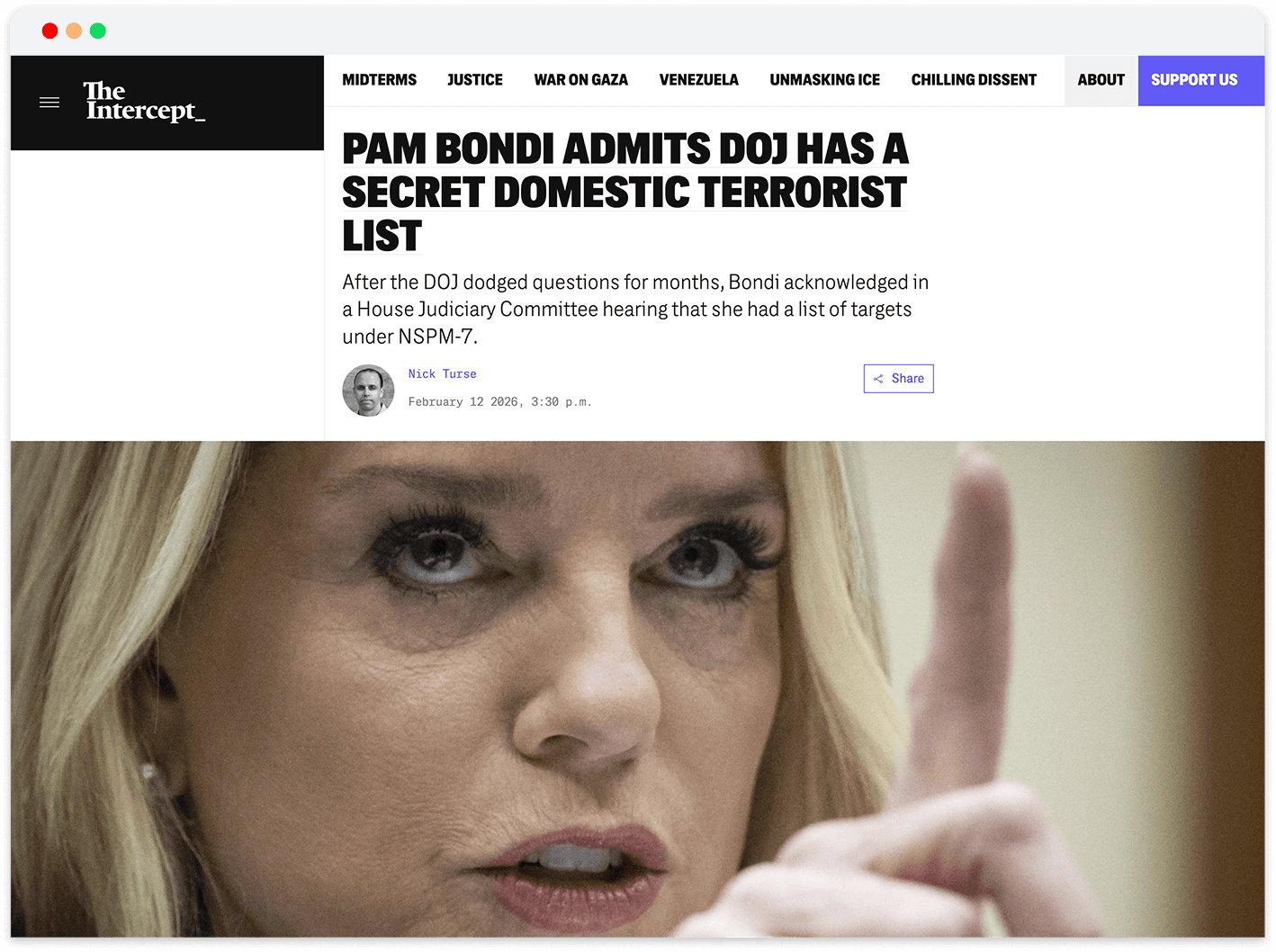
Adding persistent navigation to desktop articles
Previously, desktop article pages only had a hamburger menu, forcing readers to hunt for other content. I designed and implemented persistent category navigation on article pages to improve discoverability and reduce friction for exploration.
Adding persistent navigation to desktop articles
Previously, desktop article pages only had a hamburger menu, forcing readers to hunt for other content. I designed and implemented persistent category navigation on article pages to improve discoverability and reduce friction for exploration.
Persistent navigation on desktop articles
Persistent navigation on desktop articles
Results:
Discoverability: Readers can explore categories without hunting through menus
Lower friction: One-click access to browse more content
Brand clarity: Navigation surfaces breadth of coverage at a glance
UX standard: Brings desktop experience in line with modern web conventions
Results:
Discoverability: Readers can explore categories without hunting through menus
Lower friction: One-click access to browse more content
Brand clarity: Navigation surfaces breadth of coverage at a glance
UX standard: Brings desktop experience in line with modern web conventions
Strategic IA: From brand positioning to cross-functional execution
Editorial teams organize by newsroom beats and investigative priorities, but readers search for specific issues and current events and search engines surface content based on trending keywords and semantic relevance.
This required bridging brand strategy, information architecture, and growth thinking—connecting how readers discover us to what they find when they arrive.
Finding a common language: I audited site categories to bridge the gap between editorial storytelling and user search behavior.
Strategic IA: From brand positioning to cross-functional execution
Editorial teams organize by newsroom beats and investigative priorities
Readers search for specific issues and current events
Search engines surface content based on trending keywords and semantic relevance
This required bridging brand strategy, information architecture, and growth thinking—connecting how readers discover us to what they find when they arrive.
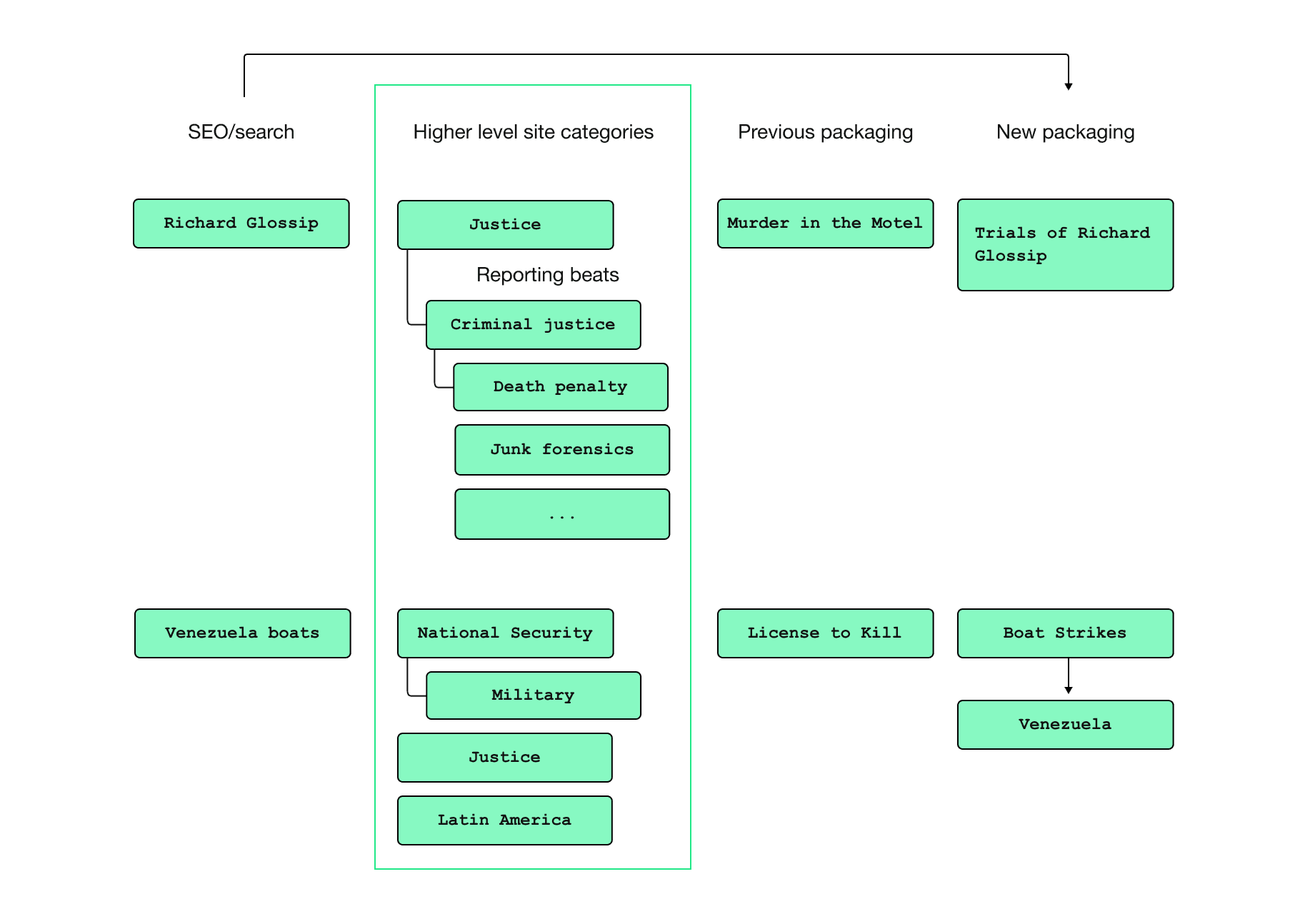
Moving from metaphorical titles (like "Murder in the Motel", "License to Kill") to descriptive, name-based packaging (like "Trials of Richard Glossip", "Boat Strikes") helped reconnect our archive with the people actively looking for it.
Moving from metaphorical titles (like "Murder in the Motel", "License to Kill") to descriptive, name-based packaging (like "Trials of Richard Glossip", "Boat Strikes") helped reconnect our archive with the people actively looking for it.
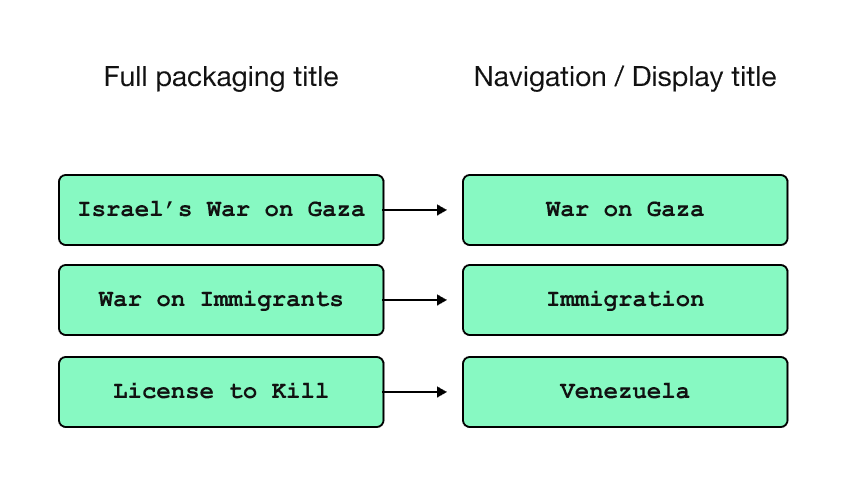
For our mission-driven categories, I created "Display Titles" for navigation. While "Israel's War on Gaza" is the full editorial context, "War on Gaza" is what a user needs to see in a condensed mobile menu to navigate effectively. It’s about being descriptive without being crowded.
Workflow: I pulled engagement reports for menu items and sent them in automated Slack messages to our editors, inviting them to give feedback and suggestions for new items we can add in the menu.
For our mission-driven categories, I created "Display Titles" for navigation. While "Israel's War on Gaza" is the full editorial context, "War on Gaza" is what a user needs to see in a condensed mobile menu to navigate effectively. It’s about being descriptive without being crowded.
Workflow: I pulled engagement reports for menu items and sent them in automated Slack messages to our editors, inviting them to give feedback and suggestions for new items we can add in the menu.
I built systems to find shared language across all three:
Analyzed search behavior to understand reader intent
Facilitated workshops with editors to surface beat vs. user language gaps
Created automated reporting (30-day category performance) to show what's actually resonating
Designed dynamic taxonomy that balances editorial priorities with discoverability
I built systems to find shared language across all three:
Analyzed search behavior to understand reader intent
Facilitated workshops with editors to surface beat vs. user language gaps
Created automated reporting (30-day category performance) to show what's actually resonating
Designed dynamic taxonomy that balances editorial priorities with discoverability
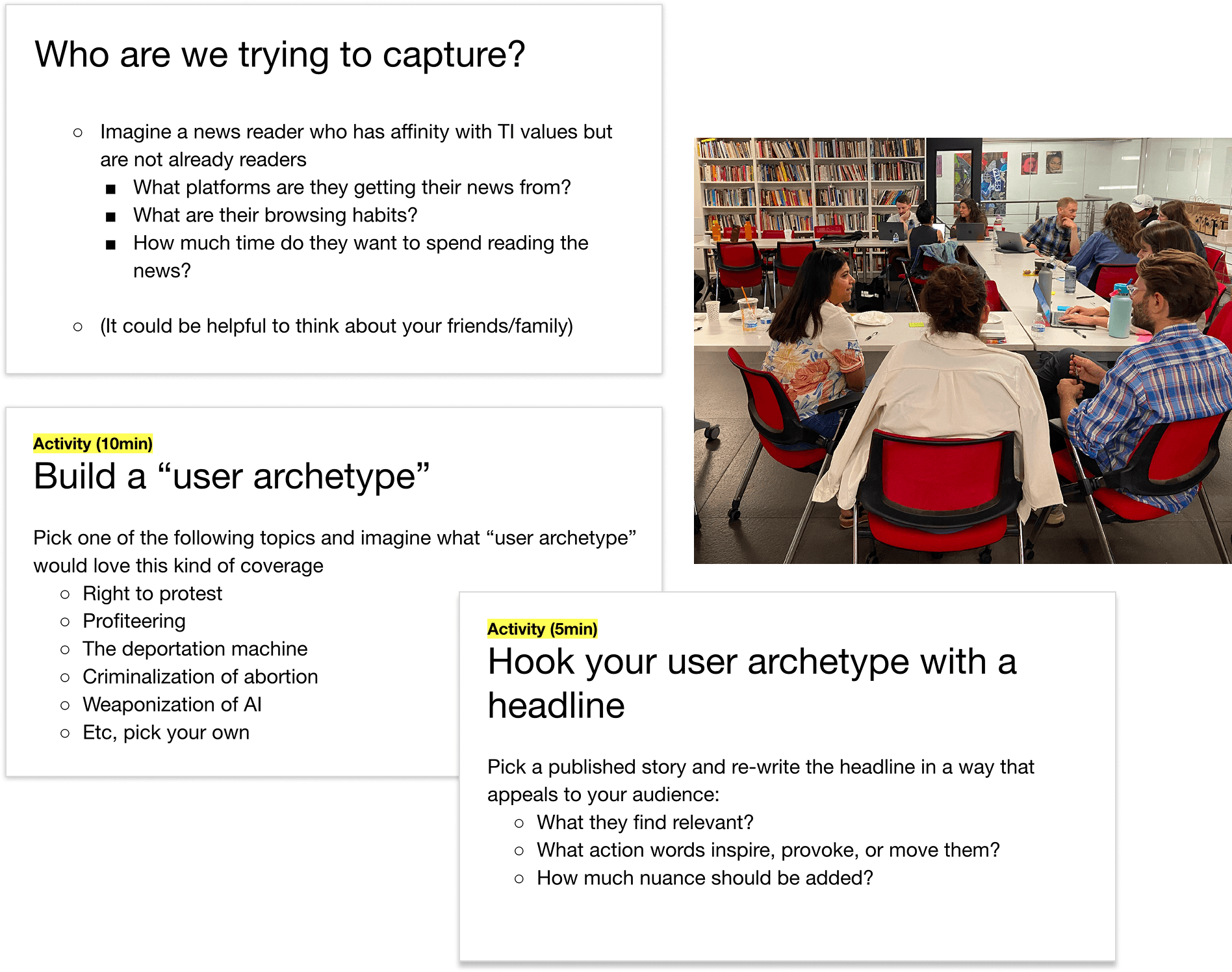
Leading newsroom workshops: Building empathy to reach new audiences
With the news industry in decline, understanding acquisition became critical. I facilitated cross-functional workshops with editorial, product, and growth to examine our assumptions about audience.
A clear pattern emerged: we implicitly designed for older, highly engaged readers. Younger and casual readers were rarely considered, especially in headlines, the first point of contact for new audiences.
Leading newsroom workshops: Building empathy to reach new audiences
With the news industry in decline, understanding acquisition became critical. I facilitated cross-functional workshops with editorial, product, and growth to examine our assumptions about audience.
A clear pattern emerged: we implicitly designed for older, highly engaged readers. Younger and casual readers were rarely considered, especially in headlines, the first point of contact for new audiences.
In one exercise, we took existing headlines and rewrote them for readers coming from social and search, as well as those from social platforms where The Intercept was reaching new, younger audiences.
The goal wasn't just simplification. It was reframing: helping readers feel the stakes of a story in their own lives, not just as abstract news events. This surfaced how much our default voice assumed prior context and ideological familiarity, and how a subtle shift in framing could transform a story from something happening 'out there' to something with direct personal relevance.
In one exercise, we took existing headlines and rewrote them for readers coming from social and search, as well as those from social platforms where The Intercept was reaching new, younger audiences.
The goal wasn't just simplification. It was reframing: helping readers feel the stakes of a story in their own lives, not just as abstract news events. This surfaced how much our default voice assumed prior context and ideological familiarity, and how a subtle shift in framing could transform a story from something happening 'out there' to something with direct personal relevance.
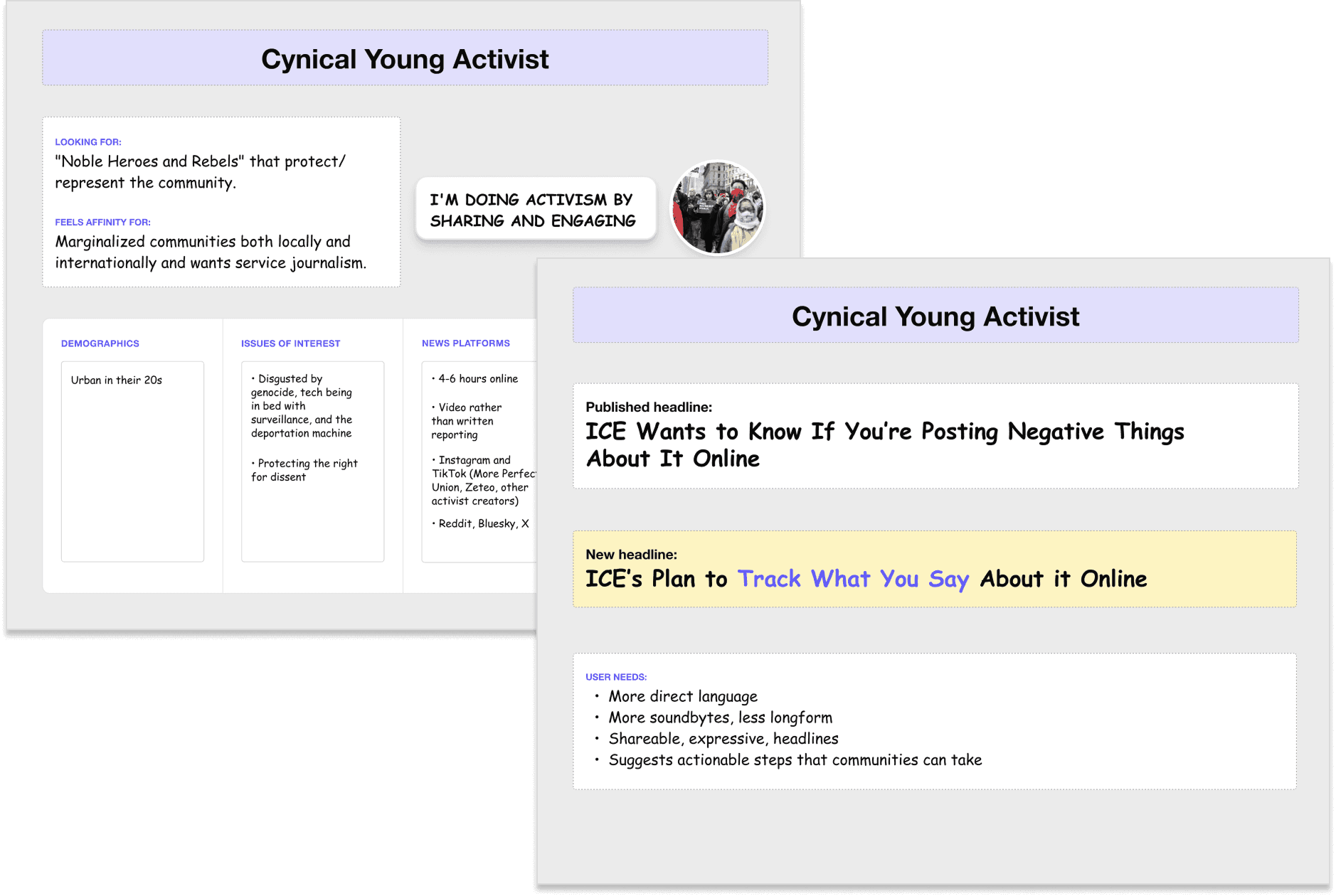
This reframing helped the team recognize how language choices shape who feels invited in. Headlines became the focus for transforming this insight into action.
This reframing helped the team recognize how language choices shape who feels invited in. Headlines became the focus for transforming this insight into action.